소식

/ 소식 / One Rod or Two? The 25-Ohm Rule That Actually Decides Your 200A Grounding

One Rod or Two? The 25-Ohm Rule That Actually Decides Your 200A Grounding

Service Grounding · NEC Reference

The rod count on the print rarely matches what actually gets installed in the ground.

Short answer: a 200 amp service needs at least one grounding rod, but code requires a second rod, spaced a minimum of six feet from the first, whenever a single rod tests above 25 ohms of resistance to earth. In practice, most residential and commercial 200A installations end up with two rods, because a lone rod rarely tests low enough on its own to satisfy that threshold.

Grounding rod count is one of the more commonly misunderstood parts of a 200 amp service installation. Some electricians drive one rod and move on; others drive two as a matter of habit. Neither approach is wrong on its own, but only one of them reliably satisfies the code requirement — and the difference comes down to a resistance test most contractors skip. The sections below walk through what actually determines rod count, how rods compare with other grounding electrode options, and what tends to fail inspection.

25 ohms

Maximum resistance-to-earth a single ground rod must test at to be code-compliant on its own.

6 ft min

Minimum required spacing between two ground rods when a second rod is installed.

8 ft deep

Standard driven depth for a single ground rod, unless rock or obstruction requires an alternate method.

The core ruleOne Rod vs Two Rods: What Actually Determines the Number Required

The National Electrical Code doesn't set a fixed rod count for a given service size — it sets a performance target instead. Under NEC 250.53(A)(2), a single rod electrode is acceptable only if it tests at 25 ohms of resistance to earth or less. If it doesn't, a second rod must be added, spaced at least six feet from the first. That single distinction is why "how many rods for 200A service" doesn't have a universal number — it has a universal test.

Code MinimumSingle Rod System

  • Legal only if measured resistance is 25 ohms or less
  • Most likely to pass in moist clay or loam soil
  • Rarely passes in sandy, rocky, or dry soil conditions
  • Requires a documented resistance test to prove compliance

Common PracticeTwo Rod System

  • Automatically satisfies 250.53(A)(2) without a resistance test
  • Standard default on most 200A residential and light commercial jobs
  • Rods spaced a minimum of 6 feet apart, driven to matching depth
  • More resilient across seasonal soil moisture changes

Because testing resistance in the field takes extra equipment and time, many contractors simply install two rods by default rather than gamble on a single rod passing. It's not a code requirement to skip testing — it's a practical shortcut that avoids a callback if the first rod fails.

Why testing mattersWhy a Single Ground Rod Almost Never Passes on Its Own

Soil composition drives resistance far more than rod quality or installation technique. A single 8-foot copper-clad rod can test anywhere from under 10 ohms to well over 100 ohms depending entirely on what it's driven into.

Soil Type Typical Resistance (single rod) Likely Outcome
Wet clay or loam 5–20 ohms Often passes on one rod
Average garden soil 20–50 ohms Borderline; frequently needs a second rod
Sandy soil 50–150 ohms Almost always needs a second rod
Rocky or gravel soil 100+ ohms May need supplemental electrodes beyond rods

This is also why regional experience matters more than a fixed rule of thumb. A contractor working primarily in a river-bottom clay area may rarely need a second rod, while one working in a sandy coastal region should plan for two rods on nearly every job.

Conductor sizingSizing the Grounding Electrode Conductor for a 200A Service

Rod count isn't the only sizing question tied to a 200A disconnect. The wire connecting the electrode system back to the service equipment has its own code-mandated size, based on NEC Table 250.66 and the service conductor size feeding the disconnect.

Service Conductor Standard GEC Size Rod/Pipe/Plate Exception
2/0 copper (typical 200A) 4 AWG copper 6 AWG copper allowed for rod, pipe, or plate electrodes
4/0 aluminum (typical 200A) 2 AWG aluminum 4 AWG copper allowed for concrete-encased electrodes

That exception matters in the field: a conductor sized for a rod-only system can sometimes be one size smaller than what's required for other electrode types, which is worth double-checking before assuming a single conductor spec applies across the whole grounding system.

Beyond rodsGround Rods Compared to Other Grounding Electrodes

Rods are the most common grounding electrode, but they're not the only option NEC 250.50 allows, and combining electrode types is often more reliable than relying on rods alone.

Electrode Type Typical Resistance Best Suited For
Ground rod Variable, soil-dependent Retrofits, standalone installs, supplementing other electrodes
Metal underground water pipe Often very low Older homes with continuous metal supply lines; must be supplemented by code
Concrete-encased electrode (Ufer ground) Typically under 5 ohms New construction, where rebar is already in the footing
A concrete-encased electrode installed during a new foundation pour often outperforms two ground rods combined — which is why new construction increasingly skips the rod-count debate entirely.

Field installationSpacing, Depth, and Installation Requirements for Multiple Rods

  • Drive each rod its full length, typically 8 feet, unless rock forces an angled or trenched installation.
  • Space two rods at least 6 feet apart to avoid overlapping resistance zones that reduce combined effectiveness.
  • Bond both rods together with a continuous conductor rather than two separate home runs to the panel.
  • Keep rod tops accessible or below grade per local inspection preference, but always document their location for future service work.

Verifying complianceTesting Ground Resistance Before Calling the Job Done

A fall-of-potential or clamp-on ground resistance tester is the only reliable way to confirm a single rod meets the 25-ohm threshold. Skipping this step and assuming a single rod is sufficient is one of the more common reasons a rough-in inspection gets flagged for correction.

  • Test resistance after the rod has settled, ideally not immediately after installation in freshly disturbed soil.
  • Record the reading for the job file, since some jurisdictions require documented proof at final inspection.
  • If the reading exceeds 25 ohms, add the second rod immediately rather than scheduling a separate return trip.

Inspection failuresCommon Mistakes That Fail Inspection

  • Installing a single rod without any resistance test to confirm it meets the 25-ohm limit.
  • Spacing a second rod closer than 6 feet, which reduces its effective contribution to overall resistance.
  • Using an undersized grounding electrode conductor that doesn't match the service conductor per Table 250.66.
  • Bonding the neutral to ground at a downstream disconnect instead of only at the main service disconnect.
  • Relying on a water pipe electrode alone without the required supplemental rod or concrete-encased electrode.

추천상품

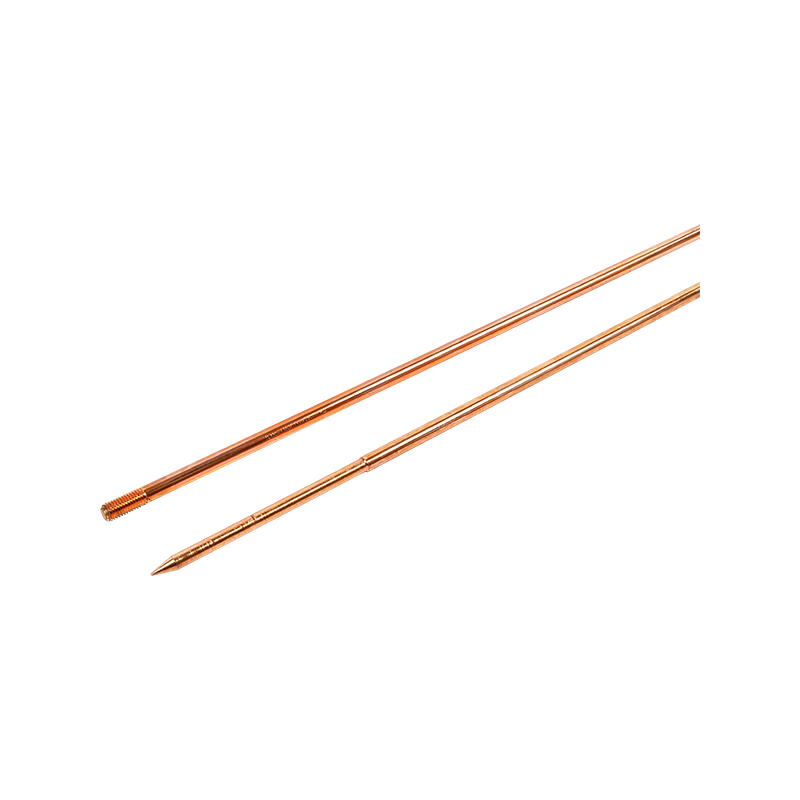
구리 클래드 스틸 접지로드

구리 클래드 스틸 접지로드

구리 용접 강철 접지로드는 나노 알칼리성 사전 도금 기술을 사용하여 만들어집니다. 구리와 강 사이의 새로운 나노 스케일 입자 증착 모델이 구성되었습니다. 금속 증착은 나노 스...

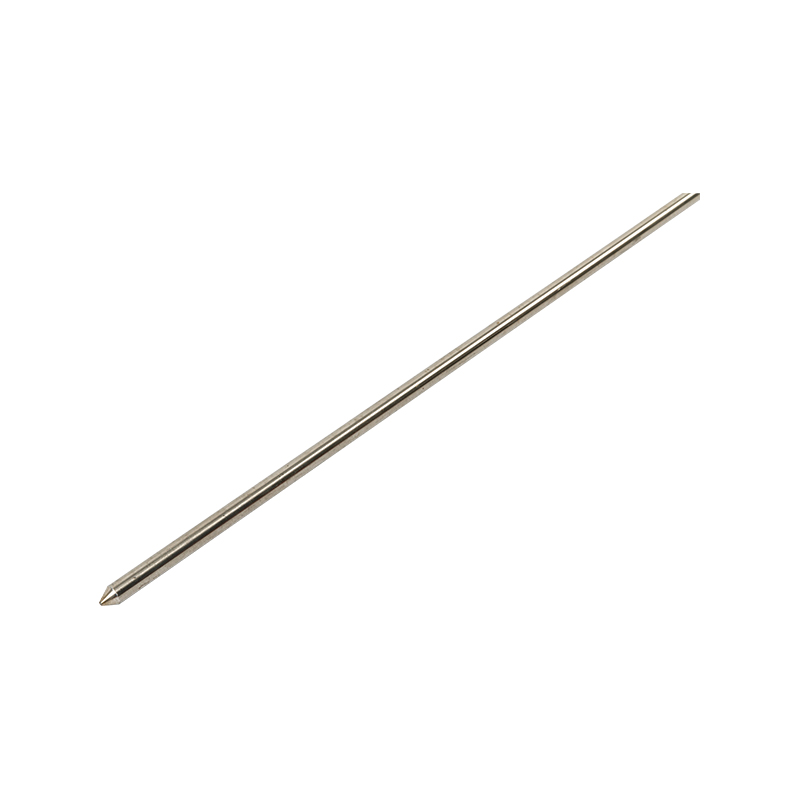
스테인레스 스틸 접지로드

스테인레스 스틸 접지로드

스테인레스 스틸 접지로드는 지리적 환경이 매우 나쁜 현장에 사용되는 방지 방지 스테인리스 스틸 재료로 만들어졌으며, 재료는 SS304, 316 ECT. 일 수 있습니다. ...

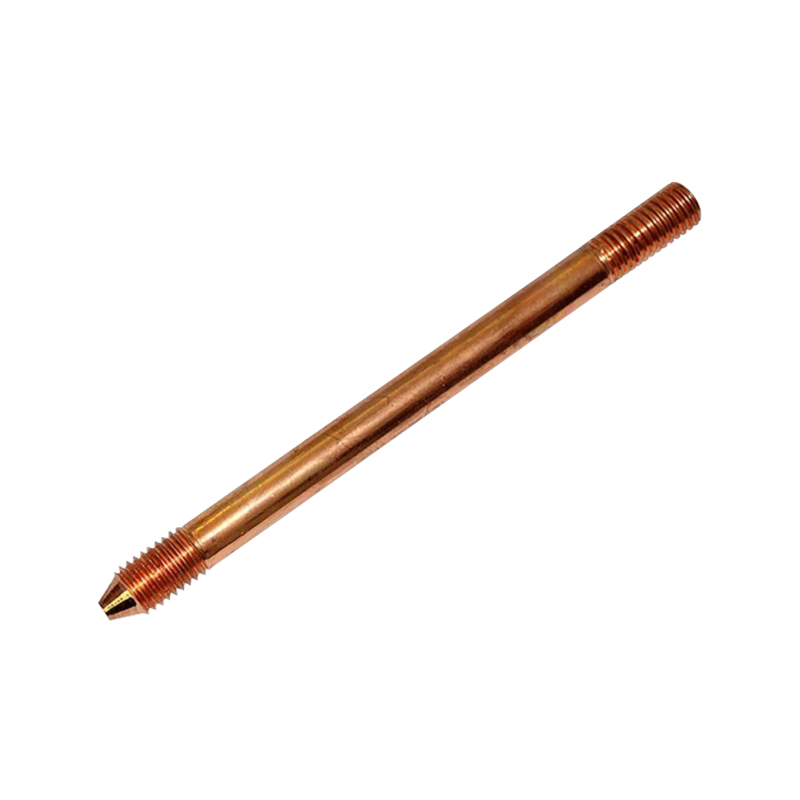
순수한 구리 접지로드

순수한 구리 접지로드

20 ℃에서 구리와 강의 저항은 각각 17.24 x 10⁻⁶ (ω mm) 및 138 x 10-6 (ω mm)이다. 구리의 전도도가 100%인 경우 표준 1020 강의 전도도는...

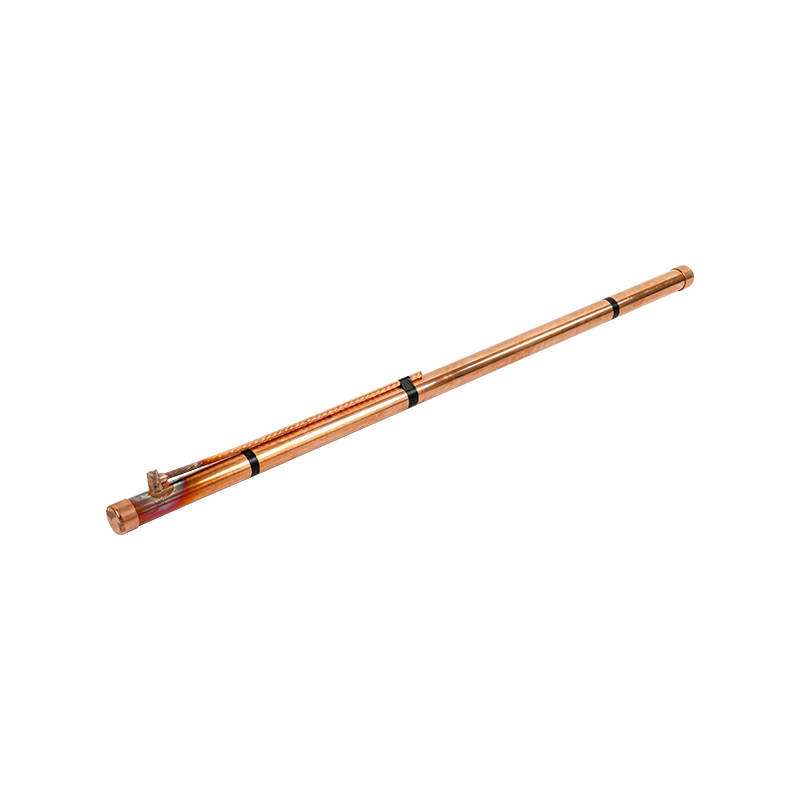
화학적 접지로드

화학적 접지로드

화학적 접지로드는 토양 저항성이 높은 위치에서 효율적인 접지 시스템입니다. 전극은 전해 염을 갖는 공장에서 미리 채워진다. 적절한 경우 염이 흡수 된 주변 토양으로 물을 방출...

바늘 타입의 번개 막대

바늘 타입의 번개 막대

번개 막대는 번개 보호 시스템에서 스트라이크 포인트를 제공합니다. 고도 막대가 있거나없는 여러 지점과 함께 사용될 수 있습니다. 그러나 연구는 테이퍼로드가있는 여러 지점이 더...

에스의 번개 막대

에스의 번개 막대

초기 증기 방출 번개로드는 유통 창고, 산업 공장, 놀이 공원, 쇼핑몰, 스포츠 경기장, 골프 코스 및 기타 넓은 지역 구조와 같은 메가 구조에 선호되는 보호 방법입니다. E...

접지 구리 가닥 와이어

접지 구리 가닥 와이어

구리 가닥 과이어는 고수 구리로 만들어져 전력 장비 및 접지 시스템에 사용됩니다. 가닥 와이어는 하드로 그린 구리선, 부드러운 구리선, 통조림 구리 와이어를 요청하여

PVC 접지 구리 가닥 와이어

PVC 접지 구리 가닥 와이어

PVC 접지 구리 스트레드 와이어는 저전압 전력 시스템에 널리 사용되는 접지 와이어입니다. 접지 와이어는 전기 장비의 접지 시스템에서 안정적이고 안전한 작동을 보장하기 위해 ...

XLPE 절연 PVC 전기 구리 전원 케이블

XLPE 절연 PVC 전기 구리 전원 케이블

XLPE 케이블은 장기 온도의 편리하고 높은 작동을 사용하여 높은 전기 강도, 기계적 강도, 고령화 저항, 환경 스트레스, 부식 및 간단한 구조를 가지고 있습니다. 드롭 제한...

접지 CCS 가닥 와이어

접지 CCS 가닥 와이어

구리 클래드 스틸 스트레드 와이어는 많은 산업에서 고체 구리를 대체하는 최상의 솔루션입니다. 구리 시장 가격의 변동성으로 모든 사용자는 대체 제품을 찾고 있으며, 우리는 모두...

접지 CCS 둥근 와이어

접지 CCS 둥근 와이어

구리 클래드 스틸 접지 라운드 와이어는 분자 적으로 99.9% 순수한 전해 구리 구리에 의해 고 인장 저탄소 강에서 제조되며, 이는 구리 층과 강철 코어 사이의 긴 지속적인 ...

접지 구리 클래드 알루미늄 재료

접지 구리 클래드 알루미늄 재료

구리 클래드 알루미늄 재료 접지는 구리와 알루미늄의 장점을 결합하고 다양한 전기 응용 분야에 적합한 실용적인 접지 도체입니다. 구리의 외부 층은 전도도가 우수하며 전류의 효율...